 Directions
 1-800-767-1560
About the Inclusive Public Art Project
The Inclusive Public Art Project is creating a permanent and community-driven art installation to celebrate New Bern’s free and enslaved African American artisans from 1770-1900. The sculpture is scheduled to be installed at Wilson Park in downtown New Bern in the summer of 2026 and will include the artistic talents of three North Carolina artists.
The Inclusive Public Art Project is funded by an Inclusive Public Arts Project Initiative grant from the Z. Smith Reynolds Foundation.

The Source Material
The project uses Catherine Bishir’s book Crafting Lives: African American Artisans in New Bern, North Carolina, 1770-1900 as a point of inspiration and a source to help tell the stories of the craftspeople who shaped the community and landscape.
The stories of these remarkable middle- and working-class people are important to understanding New Bern’s past, present, and future. These individuals came together and thrived under an institution that sought to limit their aspirations and deny them agency at every turn.
Yet, Black artisans built New Bern. They provided industries vital to the town’s growth and sustainability, established religious and civic organizations, and often bought their families out of slavery and into freedom. They were vibrant participants who shaped New Bern’s community, economy, society, and culture.
The Inclusive Public Art Project aims to bring a connectedness and grounded quality to this commemorative work. We fi nd inspiration and courage in the stories of New Bern’s African American artisans. We invite you to join us in sharing the legacies of these artisans who contributed so much to our community.
The Sculpture Artists
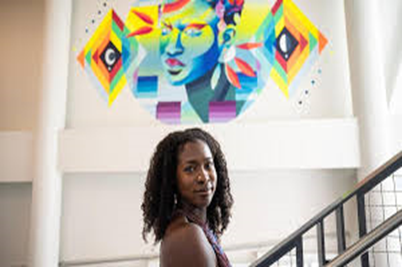
Georgia Nakima – Painter
Georgie is a multidisciplinary artist who was born in Eastern North Carolina and raised in New Bern. Using patterns, texture, and textiles, her goal is to transform the basics of portrait work and identity into a deeper dialogue of imagination and evolution.
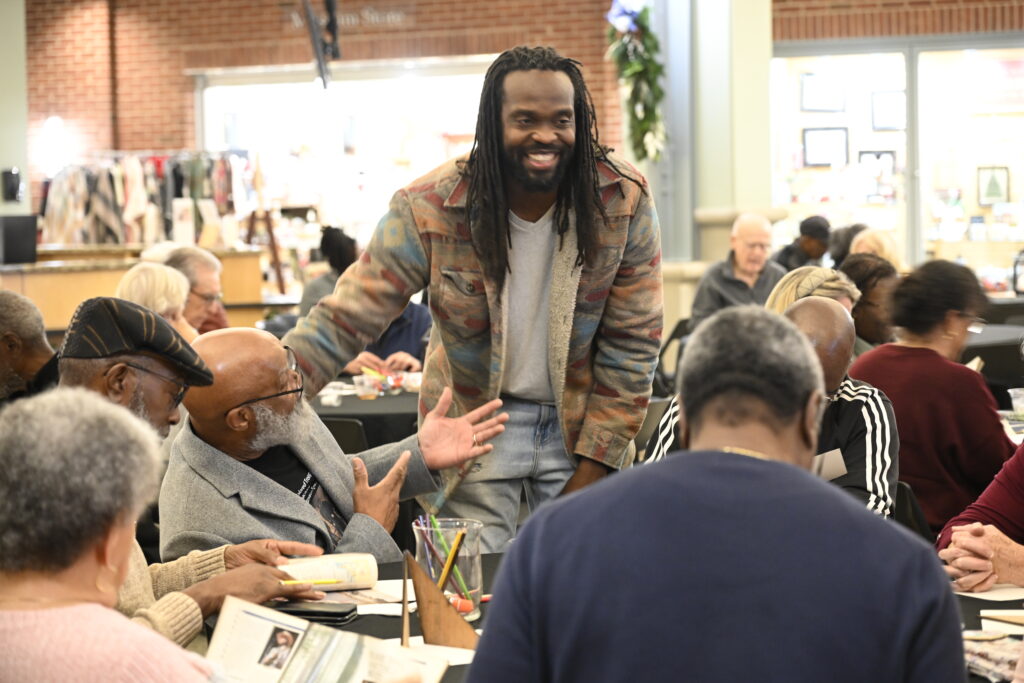
Stephen Hayes – Sculptor
Durham artist Stephen L. Hayes, Jr. makes art—woodcuts, sculptures, installations small and large—from found materials that draw on social and economic themes ingrained in the history of America and African-Americans. Hayes is well known for creating life-sized sculptures including a bronze sculpture honoring African American Union soldiers on the grounds of the Cameron Art Museum in Wilmington, North Carolina in November 2021.
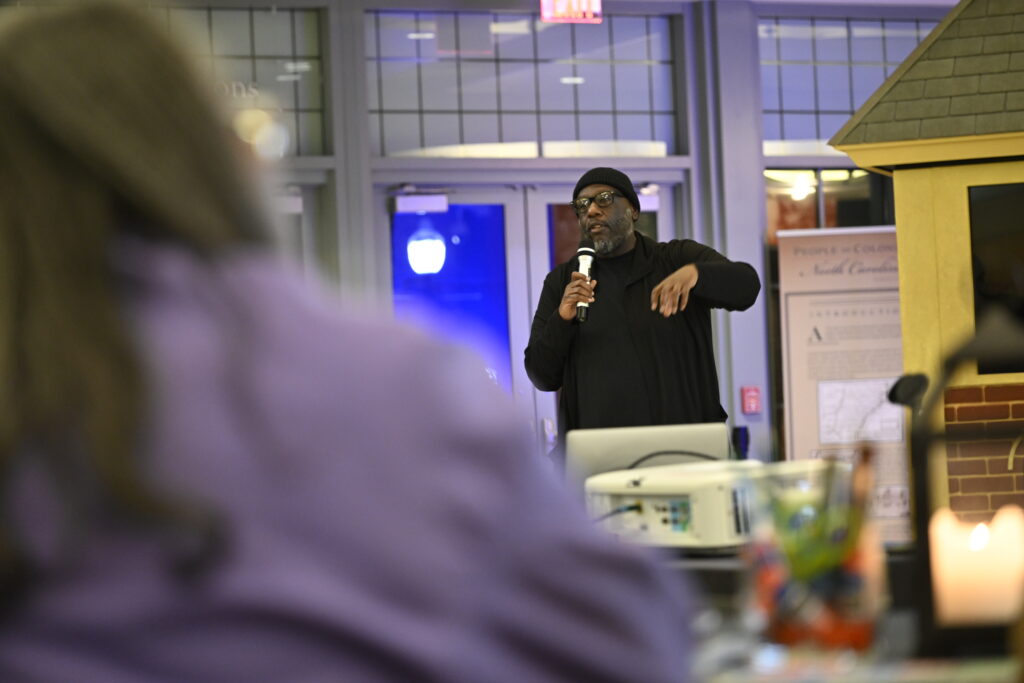
Marcus Kiser – Digital Designer
Based out of Charlotte, NC, Marcus works across multiple types of media, from branding and design to illustration and augmented reality. Inspired by artwork across genres–from comic books to classical art–he uses his artwork to tell a story that is both profound and accessible.
Meet the Artisans
Asa Spelman (Spelmore) (ca. 1746 – after 1830)
Trade: Cooper
According to Catherine Bishir, the Spelman family was one of many free Black families who moved to the Craven County area from Virginia and Maryland in the early 1700s. Asa Spelman’s 1820 pension application lists him as a cooper, someone who crafted barrels and casks for shipping both wet and dry goods. Spelman was also a Revolutionary War veteran, having enlisted and served in the 10th North Carolina Regiment.
Donum Montford (Mumford) (1771 – 1838)
Trade: Plasterer and Brick Mason
Donum Montford contributed to the construction of the John R. Donnell House and the Craven County Jail and to repairs on Christ Episcopal Church, where he and his wife, Hannah, were buried. Enslaved by the Cogdell family, Montford was sold in 1804 to John Carruthers Stanly and emancipated the following day. He became a prominent community member, a landowner, and an enslaver, and he was instrumental in apprenticing, training, and emancipating or assisting in the emancipation of many enslaved individuals throughout his life.
Amelia Green (ca. 1749 – ca. 1823)
Trade: Spinning and Weaving
Amelia Green used her skills in textile production to save money for, purchase, and then emancipate her daughters, Nancy Handy, Harriet Green, and Princess Green. Her granddaughter, Kitty, married John Carruthers Stanly and was one of the founders of the First Presbyterian Church in New Bern. Her greatgreat- granddaughter, Sarah Griffi th Stanly Woodward, was educated at Oberlin College and taught with the American Missionary Association after the Civil War. Amelia Green’s home still stands at 310 George Street.
John Rice Green (1793 – 1850)
Trade: Tailor
John Rice Green was the son of White Congressman John Stanly and an enslaved woman named Sarah Rice. He was apprenticed to be a tailor and went on to purchase his own freedom by the age of 25. He learned to read and write, acquired property, and he enslaved people, becoming one of the wealthiest free Black men in New Bern. John Green’s home at 411 Johnson Street is two doors down from the home of his uncle, John Carruthers Stanly.
To Get the Latest Information
Follow us on social media! You can find us on Facebook and Instagram as @TryonPalace. In addition to our engaging content about Tryon Palace, you’ll find weekly posts that explore a deeper look at the Inclusive Public Art Project!
You can sign up for our events emails. We send out one email each month with a look at the events coming up in the following month. It’s a great way to stay informed on the exciting events and programs at Tryon Palace!
Check out our events calendar to stay see all the exciting events about the Inclusive Public Art Project!